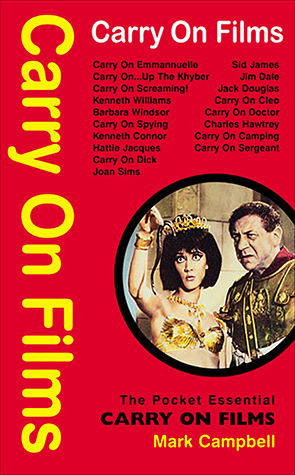
larger image »
UK RATES
Paperback
1 Pb: £3.00
Additional Pbs +£1.50/copy
Hardback
1 Hb £6.00
Additional Hbs +£4.00/copy
EUROPEAN UNION
Flat Rate:
£28.00/order
s
USA AND OTHER WORLD DESTINATIONS
Flat Rate:
£28.00/order
Publication Date: 20 September 2007
Format: Paperback
Extent: 160 pp
Our Price: £ 9.99
ISBN: 9781842432334
DIGITAL
Publication Date:2 February 2012
Format: ebook(ePub)
Our Price: 7.99
ISBN: 9781842438169
OTHER STOCKISTS
DIGITAL



Support your local bookshop by buying through bookshop.org or hive.co.uk

Note: we earn a tiny commission on bookshop.org sales if you click through and make a purchase and a percentage of the sale also goes to support local, independent bookshops - more info »




SHERLOCK HOLMES
Mark Campbell
Who is Holmes? The world's most famous detective? A drug addict with a heart as cold as ice? A millstone around the neck of his creator? He's all of these things and much, much more.
Sherlock Holmes was the brainchild of Portsmouth GP Arthur Conan Doyle. A writer of historical romantic fiction, Doyle became unhappy that the detective's enormous success eclipsed his more serious offerings. But after attempting to wipe him out at the Reichenbach Falls in Switzerland, Doyle was faced with a vociferous backlash from the general public and eventually he had no choice but to bring his sleuth back from the grave to face more puzzling mysteries.
While not strictly speaking 'canonical', Holmes' deerstalker, curved pipe and cries of 'Elementary, my dear Watson!' have been immortalised in countless stage, film, television and radio productions. An iconic fictional creation, inseparable from his partner-in-crime Dr John Watson, Sherlock Holmes has charmed and fascinated millions of people around the world since his first appearance over a century ago. He is one of English literature's finest creations.
PRESS REVIEWS FOR Sherlock Holmes
'Mark Campbell on Conan Doyle's Dartmoor'
- Independent on Saturday
Dartmoor has always held a dark, sinister romanticism. Small wonder, says Mark Campbell, that writers such as Arthur Conan Doyle and Agatha Christie found so much inspiration there.
27 October 2001
The road in front of us grew bleaker and wilder over huge russet and olive slopes, sprinkled with giant boulders. Now and then we passed a moorland cottage, walled and roofed with stone, with no creeper to break its harsh outline. Suddenly we looked down into a cup-like depression, patched with stunted oaks and firs which had been twisted and bent by the fury of years of storm. Two high, narrow towers rose over the trees.
The driver pointed with his whip. "Baskerville Hall," said he.
This year sees the centenary of Sir Arthur Conan Doyle's best-known book. Serialised in The Strand Magazine from August 1901 to April 1902, The Hound of the Baskervilles paints a vivid picture of the rugged, alien landscape of Dartmoor.
This 368-square-mile area of bleak, windswept terrain has influenced such varied writers as Sabine Baring-Gould (Urith: A Tale of Dartmoor), Eden Philpotts (The Master of Merripit) and RD Blackmore (The Maid of Sker), but Conan Doyle has done most to put the area on the map.
The inspiration for his famous novel began in April 1901, when Conan Doyle went on a golfing holiday to Cromer with his friend, Bertram Fletcher Robinson, later editor of Vanity Fair. Robinson regaled him with tales of spectral hounds, in particular a story about Richard Cabell, an evil 17th-century squire who once owned Brook Manor, near Buckfastleigh on the edge of Dartmoor. One night, suspecting his wife's infidelity, he attacked her in a jealous rage and she fled across the moor with her faithful hound at her heels. He eventually caught up with her and killed her, but the hound turned on Cabell and ripped his throat out, before dying of the squire's knife wounds. After that, the dog was said to haunt each new generation of the family. Other tales concern the "Whist Hounds" (said to live by day in the stunted oaks of Wistman's Woods on the banks of the West Dart) and the "Black Dog of Dartmoor", a large animal with flaming, red eyes and a satanic nature, which chased unwary travellers late at night.
Intrigued by these ghostly tales, Conan Doyle checked into Princetown's Duchy Hotel (now the High Moorland Visitors Centre, 01822 890414; www.dartmoor-npa.gov.uk), with Robinson as his guide. Sometimes they walked 14 miles a day across the moorland, and he very quickly realised that the area would make an ideal location for a Sherlock Holmes adventure.
Conan Doyle borrowed the topography of the Moor, but allowed himself artistic licence with the names. The deadly but fictitious Great Grimpen Mire was inspired by the equally deadly - but all too real - Fox Tor Mire. You can walk across it from Whiteworks, an old mining hamlet a few miles south-east of Princetown - but be warned, many a Dartmoor pony has disappeared in the moss-covered bogs. For Grimpen, the village of Postbridge on the B3212 fits Conan Doyle's description best, while Holmes's hiding place in a neolithic hut matches nearby Grimspound so closely that you could make a good guess as to which shelter he used. The standing stones (or menhirs) described by Watson are found all over Dartmoor; Drizzlecombe, south of the Burrator Reservoir near Yelverton, boasts the highest at 14ft.
Another writer closely associated with the moor is the Queen of Crime herself, Dame Agatha Christie. In the summer of 1916 she booked herself into the "large, dreary" Moorland Hotel, a few hundred yards from the summit of Haytor, to finish work on what would be the first of her 74 novels, The Mysterious Affair At Styles. In her autobiography she describes how she would write all morning, have dinner, wander alone across the moorland and re-enact out loud the chapter she was working on. Then she would come back, have dinner, sleep for 12 hours, and wake up and write passionately again the next morning.
Sadly, the original hotel no longer remains; it was razed by an electrical fire in 1964. But a new hotel was built on the site in 1972. Catering for special interest holidays for the more mature, a three-night walking holiday starts at £162 (020-8905 9558; www.hfholidays.co.uk). You'll find a portrait of the author hanging above the Agatha Christie Bar, and all her novels are readily available to read. Especially, of course, her first one.
Christie was born in Torquay and spent much of her life in a Georgian house on the banks of the river Dart at Galmpton, so it's no surprise that the area features prominently in her books. Dartmoor is mentioned in The Big Four (1927) and Dead Man's Folly (1956), but it's the 1931 supernatural whodunit, The Sittaford Mystery, that really shines the spotlight on it. The story goes as follows: Sittaford, a hamlet on the fringe of the moor, has been isolated by a winter snowstorm and a seance appears to predict the death of one of its inhabitants. Although the name comes from Sittaford Tor, just north of the B3212 at Postbridge, the fictional hamlet is located on Bridestowe and Sourton Common, off the A386 on the Moor's westernmost edge. Okehampton became "Exhampton" for the duration of the book.
Common to Christie and Conan Doyle is the forbidding bulk of Dartmoor Prison. It was built two centuries ago in Princetown, at the centre of the Moor, and can hold 702 inmates. Both crime writers featured convicts escaping from it, most famously Selden, the Notting Hill murderer in The Hound Of The Baskervilles. The official museum (01822 890305) is housed in a dairy stable of the old prison farm.
Finally, John Galsworthy wrote The Forsyte Saga (1922) in Wingstone Farm, to the southwest of Manaton, while a few miles north, Evelyn Waugh found the inspiration for Brideshead Revisited (1945) at a Tudor cottage in Easton Cross - now the Easton Court Hotel (01647 433469) on the A382. He once defined the charm of the place as "something more than comfort - a tranquillity which makes it uniquely agreeable for both work and rest". - , Independent on Saturday
'Mark Campbell on Sherlock Holmes' London Haunts'
- Independent on Saturday
Hot on Sherlock Holmes's trail Mark Campbell sniffs out the London haunts of Conan Doyle's legendary sleuth
27 October 2001
One of the most famous literary addresses in London is 221b Baker Street. There's only one problem - the cosy rooms of amateur detective Sherlock Holmes and his friend, John H Watson, don't actually exist.
The "real" 221b, subsumed by the head office of the Abbey National, is not a worthy place of veneration. However, down the street in the Sherlock Holmes Museum (020-7935 8866; www.sherlock-holmes.co.uk), you'll find a mock 221b frontage and a frighteningly accurate rendition of the dark and cluttered Victorian interior of Conan Doyle's stories.
But for every fictitious address in the Canon (the official term for the four novels and 56 short stories featuring Holmes and Watson), you'll find plenty of bona fide locations in the capital. To begin with, turn the corner into Wigmore Street and you pass the post office that Holmes magically deduced Watson had visited in The Sign of Four (1890).
From there, it's a short walk to Oxford Street, as mentioned in The Red-Headed League (1891), a story that also has Holmes visiting St James's Hall, Piccadilly, for "a good deal of German music". Demolished in 1905, this was once London's premier concert hall. And at Piccadilly Circus was the bustling Criterion Bar in which Watson bumped into his old mate Stamford in A Study in Scarlet (1887).
Walk south down Regent Street to Pall Mall, and you'll see where the fictitious Diogenes Club was supposed to be situated, a place that contained "the most unsociable and unclubbable men in town", according to The Greek Interpreter (1893). Its founder member was, of course, Holmes's brother, Mycroft.
Here, you're only a stone's throw from the Thames, and it was along this stretch of water that Holmes pursued villainous Jonathan Small in an unfeasibly exciting boat chase in The Sign of Four. Beginning at Westminster Stairs, a landing-stage by the Houses of Parliament, the detective and his quarry eventually ended up miles downriver at "the melancholy Plumstead Marshes". (As I write, I can just see the latter area from my window, now coruscated with hundreds of new houses - it probably looks more melancholy now than ever...)
From Whitehall, cut through Great Scotland Yard (home of the Metropolitan Police until 1890) and you'll find yourself standing opposite the magnet for fans from across the world - the Sherlock Holmes Pub (020 7930 2644; www.sherlockholmespub.homestead.com) in Northumberland Avenue. Built on the site of the old Northumberland Hotel - in which Sir Henry Baskerville stayed in The Hound of the Baskervilles (1901-02) - the cavernous interior is filled with bric-a-brac from every Holmes adventure. And if you venture upstairs to the restaurant, you'll find the interior of another 221b Baker Street, this time a Festival of Britain display bought by Whitbread & Co in 1957. The Holmes mannequin may be on the cadaverous side, but you can't fault the Victorian detail.
Close to the pub once stood Nevill's Turkish Bath, its entrance now forming part of the wall of the bank in Craven Passage. It was here, in the upper- floor drying room, on 3 September 1902, that Holmes and Watson first discussed The Illustrious Client (1924). Walk up Craven Street, turn right, and you'll be outside Charing Cross Station. Built in 1864 by John Hawkshaw, this is where the two colleagues boarded a train for The Abbey Grange (1904). Further along is the elegant Simpson's-in-the-Strand (020-7836 9112), a restaurant that Holmes repaired to after his draining exertions as The Dying Detective (1913).
Now go up Bow Street and you'll pass the Magistrates' Court (0845 6008889) in whose cells languished The Man With The Twisted Lip (1891). Turn right at Great Queen Street, cross Kingsway and walk through Lincoln's Inn Fields. There, you'll find the eccentric Hunterian Museum of the Royal College of Surgeons (020-7869 6560; www.rcseng.ac.uk), where Dr Mortimer spent a day of "pure amusement" in The Hound of the Baskervilles.
Once you've successfully navigated Holborn Circus, you can finish your tour where it all started - St Bartholomew's Hospital, West Smithfield. It was in the bowels of this Victorian edifice that the first meeting took place between war invalid and amateur sleuth, as described in A Study in Scarlet. "I've found it!" was Holmes's first utterance. And the rest, as they say, is history - or rather, fiction.